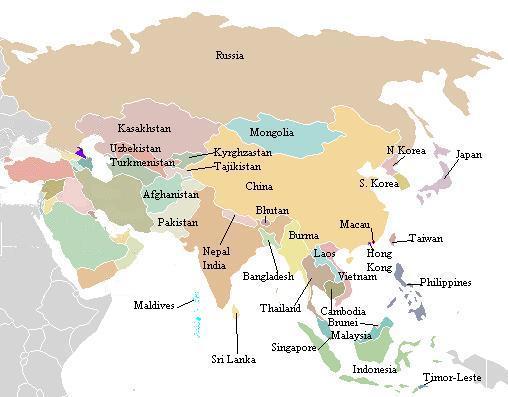
Description:
There are 52 countries in Asia. They are: Afghanistan, Bahrain, Bangledesh, Bhutan, Brunei, Cambodia, China, East Timor, India, Indonesia, Iran, Iraq, Israel, Japan, Jordan, Kazakhstan, North Korea, South Korea, Kuwait, Kyrgyzstan, Laos, Lebanon, Malaysa, Maldives, Mongolia, Myanmar, Nepal, Oman, Pakistan, the Phillipines, Qatar, Russia, Saudi Arabia, Singapore, Sri Lanka, Syria, Taiwan, Tajikstan, Thailand, Turkey, Terkmenistan, United Erab Emirates, Uzbekistan, Vietnam, and Yemen. The climate in Asia is moist in the southeast regions, and dry in the interior regions. There are big temperature ranges and the most active place for tropical cyclone activity on Earth lies near the Phillipines.
Asia is about 17 million square miles, making it the largest continent in the world in terms of area. Asia is also the biggest in the world with population, having about 4 billion people. Asia's western most point is Cape Baba in Turkey, and the eastern most point is Cape Chelyuskin in Siberia. Asia is home to the highest and the lowest point in the world: Mt. Everest at 8,848 meters, and the Dead Sea at -395 meters.
The Family Issue in Asia:
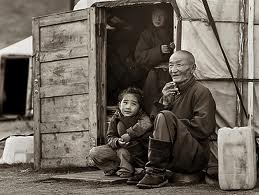
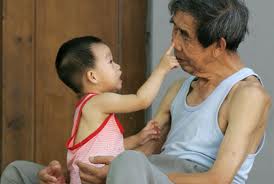
In Asia, males and older individuals usually occupy a higher status, and in general, men have a higher status than women. Shame and guilt is used to discipline children, and loyalty and honor to the family is emphasized. Asians believe in a less open display of emotions because it shows a sign of maturity self-control. Children earn early in life that the family is the central and primary unit.
Asians believe in the theory that children should respect their elders, and that everyone is to show loyalty to authority figures. Behavior of an individual family member is reflective of the entire family. The father of an Asian family is said to be authoritative and distant, and provides the economic and physical needs of the family. The mother of an Asian family is said to be more responsive to the children and serves as the intermediary between the father and the children.
Climate Action Network South Asia:
The objective of the climate action network of south asia is prevent dangerous climate change through awareness. The network includes six members: Bangledesch, Bhutan, India, Nepal, Pakistan, and Sri Lanka. The CANSA protects the global climate from human interference, promotes the protection of the global climate from human interference, and they also inspire the government, business, community, and individual action to aid in protecting the climate.
The network shares an understanding of climate changes and the causes to all of the members. They also organize and inspire their members to take action on climate change in regions, nations, and communities. The vision of CANSA is a world striving to protect the global climate and global environment. The mission of CANSA is to support and empower organizations to influence the development of an effective global strategy. They want to reduce greenhouse gas emmissions, but also ensure it will be reinforced international and local levels.



|
Human trafficking.docx Size : 13.143 Kb Type : docx |
|
|
Super Bowl.docx Size : 13.593 Kb Type : docx |
CHINA:
The power within the people's republic of China is divided among three bodies: the Communist Party of China, the State Council, and the People's Liberation Army. The paramount leader is the person who heads all three bodies. China is a communist coutnry. Over the past twenty years, China has become an active participant in the UN peacekeeping.
Chinese culture is one of the oldest. Important components of chinese culture include literature, music, visual arts, martial arts, and cuisine. Classical chinese is the main language spoken, and chinese music dates back to the beginning of Chinese civilization. China is one of the main birth places of martial arts and is often given the name Kung Fu. Chinese food dates back to the slave society. The Chinese believe that the preparation of food is an art and not just a craft. The way chinese food is prepared is based on many aspects of the Chinese culture.
Japan:
The Japan government is a constitutional monarchy, where the emperor has limited power. His role is "the symbol of the state and the unity of the people." The power is held mainly by the prime minister, while sovereignty is held mainly with the Japanese people. Japan's legislative organ is a bicameral parliament, and consists of a House of Representatives, and a House of Councillors. Japan joined the UN in 1956 with great enthusiasm and public support. After they joined, Japan participated actively in the social and economic activities of the United Nations.
The Japanese culture has many influences from Asia, Europe, and North America. Many aspects of Japanese culture include language, literature, music, visual arts (painting, calligraphy, and sculpture), architecture, clothing, sports and leisure, and food. The japanese have defined a unique cuisine, the in recent years has become more popular in Europe and North America. The Japanese diet consists of rice, fresh, lean seafood, and vegetables. The longevitity of Japanese people is related to the diet.
